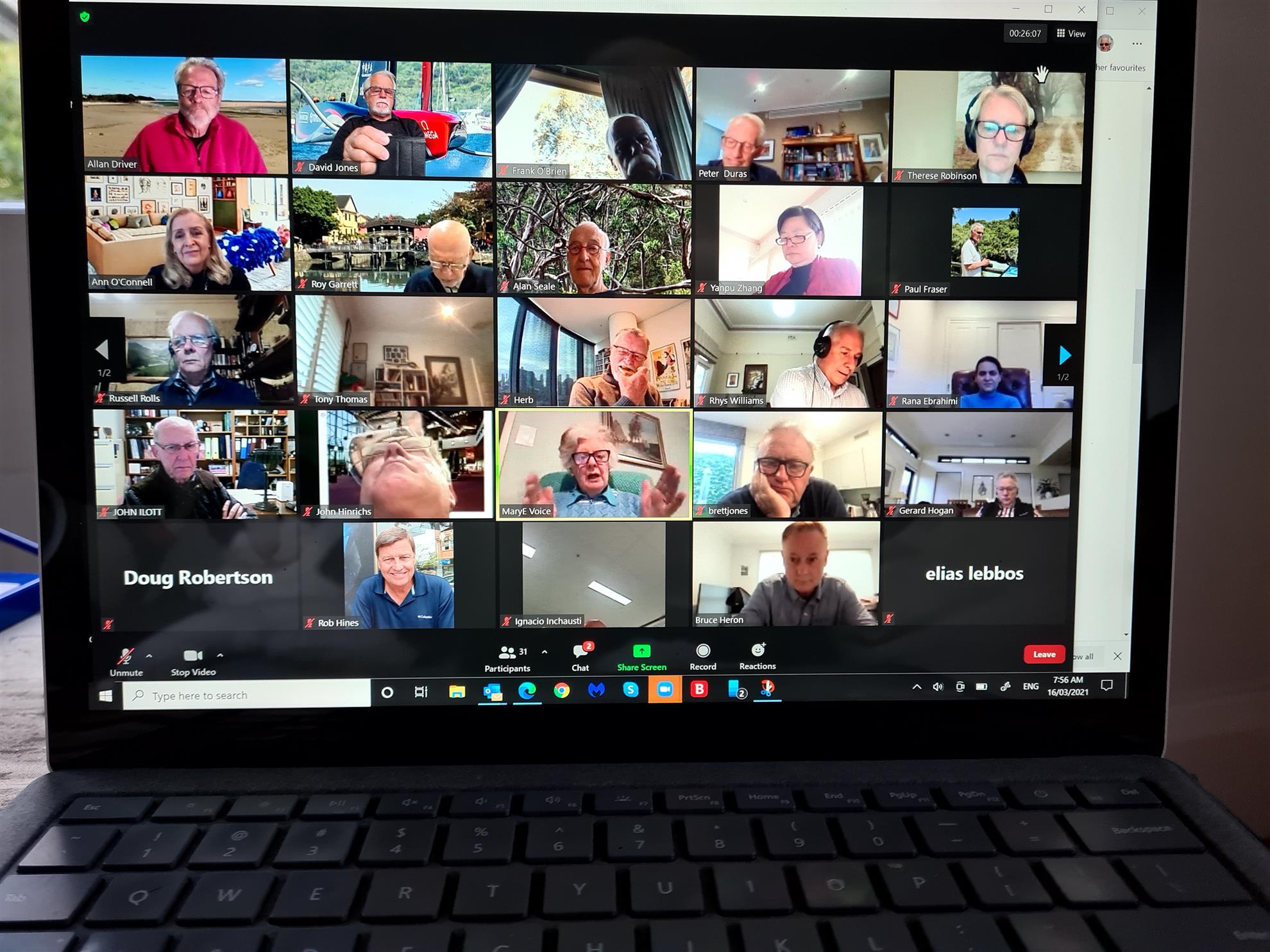
President Therese Robinson welcomed all attending the meeting by Zoom video conference and acknowledged the traditional owners of the land.
Chair Mary Voice also welcomed everyone and proposed a toast to Rotary International.
Guests
There being no other guests or visiting Rotarians, President Therese Robinson welcomed guest speaker Ann O’Connell.
Chair Mary Voice then formally introduced Ann O’Connell to members. Ann is Professor at Melbourne Law School, specialising in tax with a special interest in taxation of charities and not-for-profits. She is a Senior Member (part-time) of the Administrative Appeals Tribunal and consultant to the Australian Tax Office. She was a member of a Working Group that advised the Treasurer about tax concessions for the NFP sector and has recently advised the OECD about tax and philanthropy. Her book, Taxation of Charities and Not-for-Profits was published recently in November 2020.
Ann began her career as a personal injuries lawyer and then progressed to corporate law, specialising in mergers and acquisitions. From M&A Ann progressed to then specialise in taxation, leading to an opportunity to teach tax law at University of Melbourne in 1990 leading to becoming an expert over the past 20 years in taxation exemptions for charities and not for profits.
Ann explained that there are three main aims of income taxation, being:
- To raise revenue to enable governments to provide public services where the private sector can’t;
- To enable the government to influence behaviour (e.g. tax relief to save for retirement, or to discourage behaviour through tobacco taxes); and
- To redistribute income through mechanisms like the progressive tax rate structure.
Ann provided some interesting stats, including that:
- Over 200,000 organisations qualify as being exempt from income tax;
- Over 60,000 are registered charities with the rest being other forms of not-for-profit entities;
- Over 28,000 are recognised as Deductible Gift Recipients (“DGR”) in Australia and Tax Concession Charities, meaning that donations to such organisations are tax deductible.
Ann advised that we do not know how much tax the government is missing out on from some of these tax-exempt bodies. Professional sporting organisations such as AFL, NRL and Cricket Australia enjoy high commercial revenues while still benefiting from tax-exempt status.
Some of the criteria that such organisations must demonstrate include:
- The entity must show that they have a non-distribution restriction, so that the income remains within the organisation;
- They must show a worthy purpose (charitable or community). Keating introduced the concept for tax purposes of community service organisations that aren’t charities but do provide a community benefit.
Ann proposed some thought-provoking questions to members including:
- Should charities be permitted to enjoy tax exempt status while engaging in commercial business activities or politics?
- Should private schools or religious schools remain tax exempt?
- Should organisations that promote agriculture be recognised as a charity?
- Should professional sporting organisations be tax exempt? and
- Should cross-border philanthropic organisations be granted tax exempt status and even DGR status?
Many members raised questions of their own, including whether State governments should afford similar exemption status to such organisations relating to state-based taxes such as payroll tax, stamp duty etc? On another question as to whether the tax status could be used to influence the achievement of better efficiencies in the NFP sector by encouraging mergers of like-minded, similar purpose organisations who each have their own boards and management teams.
Ann concluded by suggesting that a better process for allocating grant funding could see improved efficiencies. Ann also felt that the tax exemption status of some organisation types should be reviewed, including even University of Melbourne.
Mary Voice thanked Ann for her highly relevant presentation and provide members with Ann’s email address if they wished to engage in further discussions on the matter.
Mary then used the moment as a segue into a presentation by Bruce Heron on the tax status of Rotary Foundation and The Rotary Foundation Trust (TARFT).
Bruce explained that donations directly to Rotary Foundation do not attract tax deductibility, falling under the banner of the issue raised by Ann O’Connell that cross-border philanthropic organisations are denied such status.
To overcome the disadvantage of not enjoying such tax deductibility status, TARFT was formed as an associate foundation. TARFT enjoys DGC status and, as such, donations to such organisations are tax exempt. Donations to TARFT are still recognised towards Paul Harris Fellowship recognition or Centurion status for instance, with Australian dollar donations converted to USD equivalents for that purpose.
In discussion with members, Rob Hines also advised members that Rotary Australia World Community Service Ltd. (RAWCS) https://rawcs.org.au/ was also formed to enable Australian Rotarians, Rotary Districts and Rotary Clubs to assist disadvantaged communities and individuals through humanitarian aid projects. RAWCS also enjoys DGC status through three tax-deductible funds, being:
- Rotary Australia Overseas Aid Fund – currently supporting 387 overseas projects delivering humanitarian aid in 130 countries;
- Rotary Australia Benevolent Society – last year supported 104 compassionate grants to Australians in need;
- Rotary Australia Relief Fund – rapid response to accept donations to major appeals disbursing funds to appropriate aid projects.
Bruce undertook to provide a link to his presentation.
Announcements
- Frank O’Brien thanked members for an outstanding effort in supporting DIK’s working bee last Saturday 13 March, with 21 members and partners assisting.
- Elias Lebbos attended the Bearbrass Probus Club’s inaugural AGM, congratulating Tony Thomas for an outstanding job, with the Club already having 50 members. RCM supported the launch of the Club and should be proud of the progress made already;
- Anne King updated members about fundraising challenges for the Garden Design Fest and in particular sought support in identifying potential corporate sponsors.
- Members milestones were mentioned including Rotary anniversaries and birthdays.
Brett Jones “Inquisition”
Brett invited Rhys Williams to give members some fascinating insights into his life and background.
Highlights included:
- Rhys was born in Hong Kong, with a sister also born in Shanghai
- Rhys and his family moved to Australia when he was 5 years old, settling in Halls Gap at the local fish & chip shop;
- Rhys’s mother fell ill and passed away from a brain tumour when Rhys was quite young. His father was 55 years old when he married, so he was considerably older than Rhys’s mother. His father also struggled with poor health, requiring the children to grow up quickly and support him in their teens. Rhys’s father passed away when Rhys was only 19.
- Rhys studied hard and went on to university to gain an arts degree, leading to a career beginning in secondary technical schools in 1979, such as Collingwood Technical School and even a technical school at Pentridge Prison.
- Rhys went on to RMIT before pivoting in 1995 towards the beginning of what became Australia’s highly successful transnational education sector.
- Rhys initiated and developed highly successful transnational education programs, particularly in the Asean region including the RMIT Vietnam campus which is now one of the largest foreign branch campuses in the world. For the past 25 year Rhys has managed transnational education programs with the Australian and New Zealand Institute of Insurance and Finance (ANZIIF), Box Hill Institute and Victoria University, creatin education partnerships with China, Singapore, Vietnam to mention just a few.
Therese Robinson then reflected upon the morning’s presentation, thanking Ann O’Connell and members.
President Therese noted the Board meets next week by Zoom and if members wish to attend by Zoom they are able to.
REMINDER: If members are interested in making donations to the Club, please do so – see Rob Hines link.
Meeting closed.


 Chris Wang OAM: Give Every Child a Future
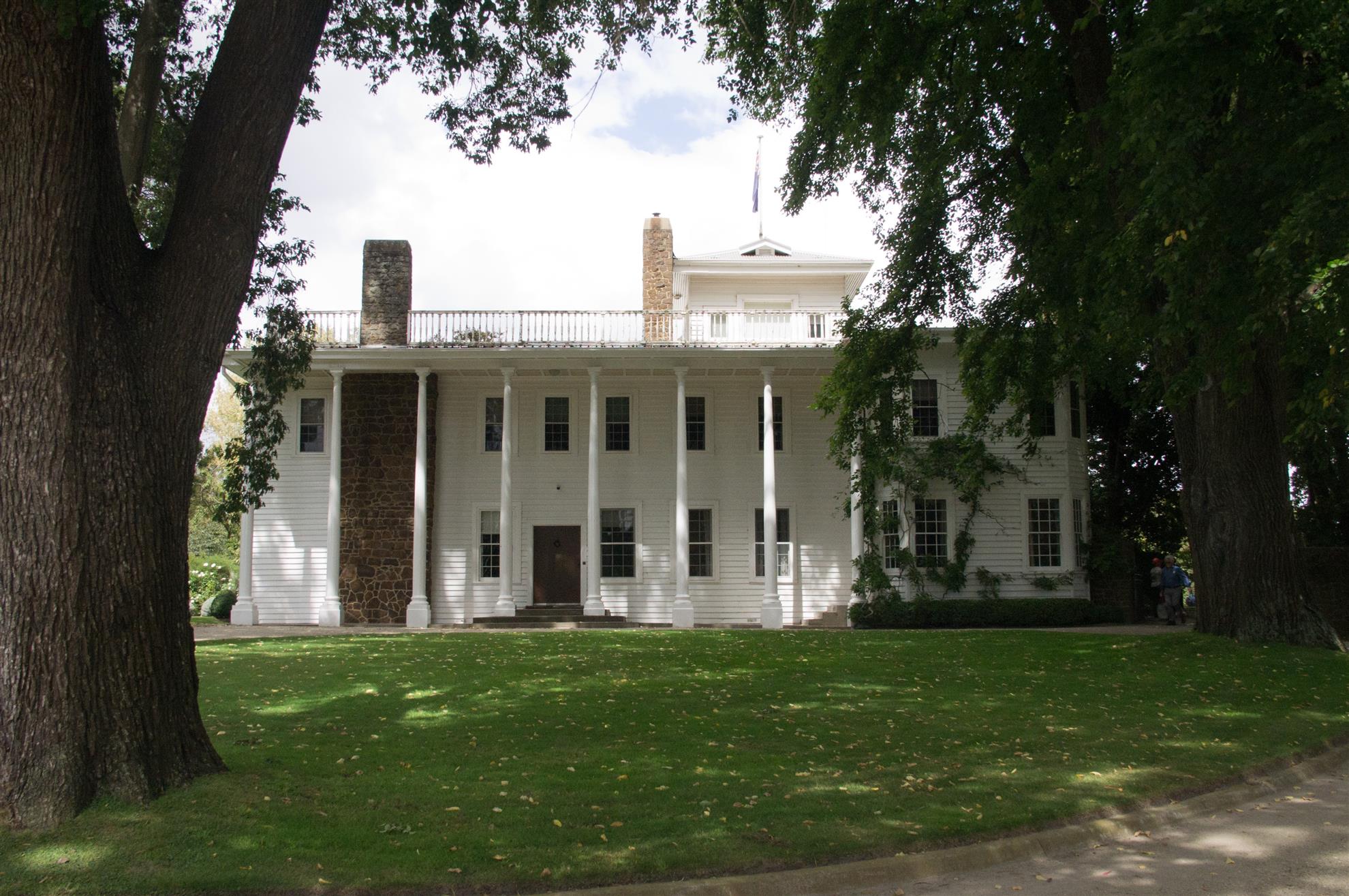 Rotary Central Melbourne (‘RCM’), Rotary Echuca-Moama (‘REM’) and Bearbrass Probus had a great social day at Cruden Farm, Langwarrin on Monday March 1.
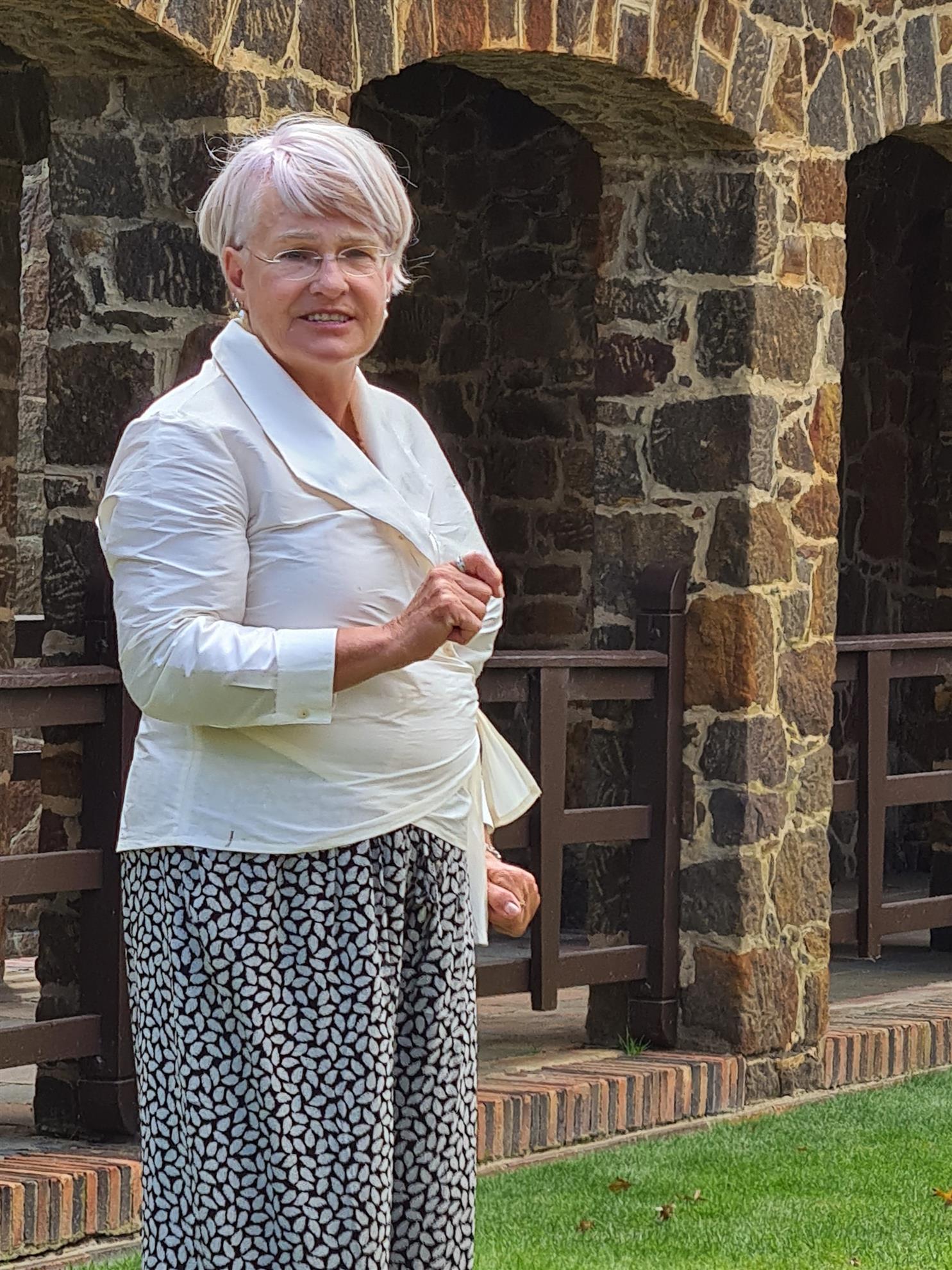 Dame Elisabeth had no idea that after ten years her pay rate for secretaries was a “bit obsolete” and Hennie eventually wangled her pay rise after her boss responded, “Well what’s the going rate?”. Dame Elisabeth was such a workaholic that morning and afternoon tea was always skipped, even during Bridge days with her friends. She would typically start her day at 5.30am with a briefing of the head gardener.

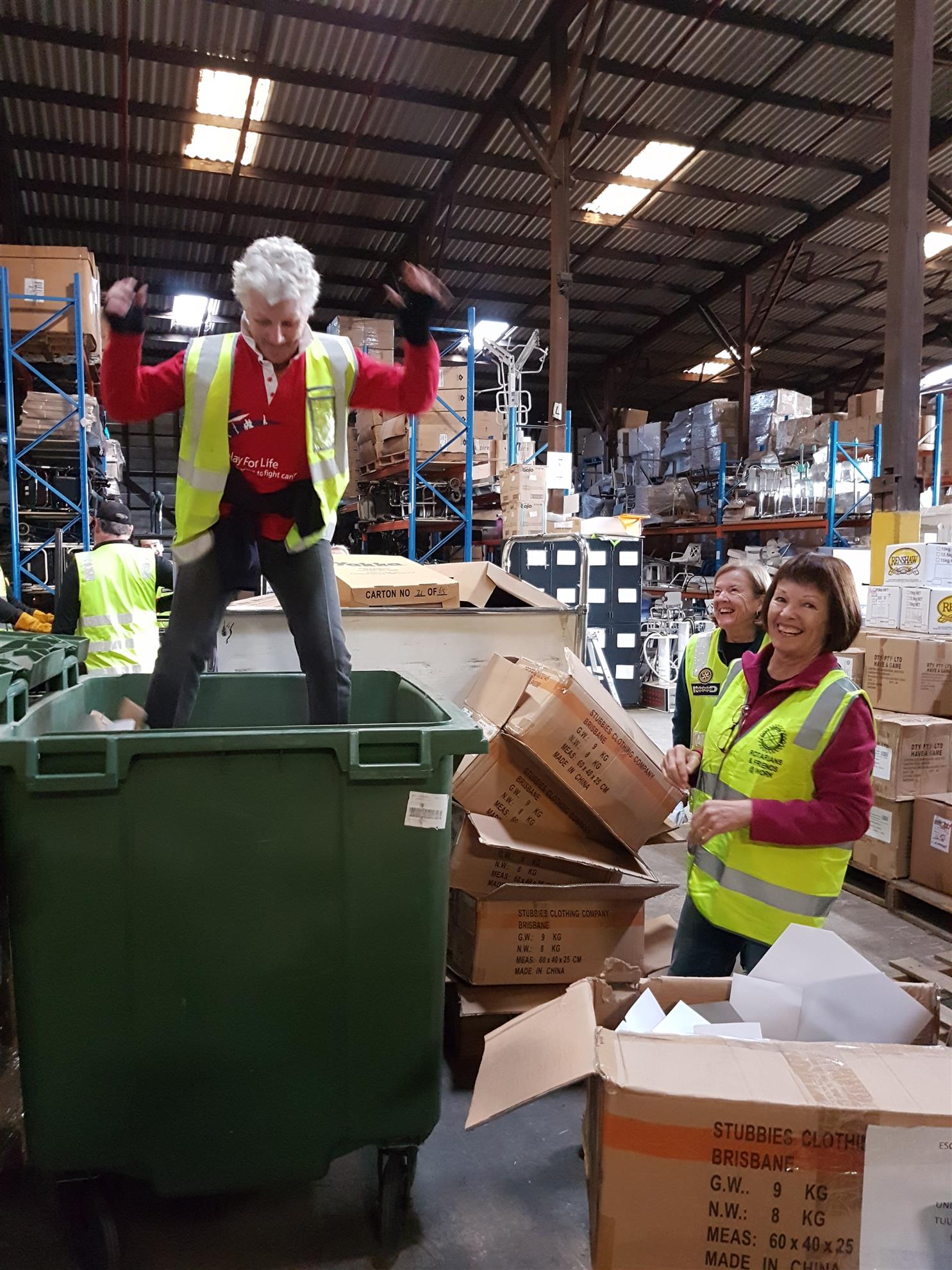 This invitation is to all our Members and partners who can help with our next working bee at Donations In Kind ['DIK'].