
This is a Zoom meeting.
If you would like to visit our meeting, please contact us by email on rotaryclubcentralmelbourne@gmail.com or phone 0455-858-996 and request log-in details.
The meeting will commence at 7:40am and conclude no later than 8:45.
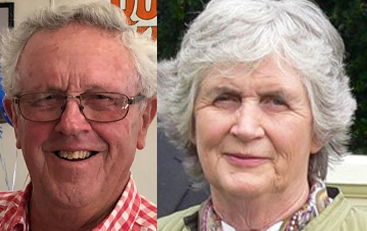 Sue and John Marriott: The formation of Landcare and the effects of group communication
Prior to the 1980s, conservation was a dirty word to many farmers and politicians who saw land clearing as an opportunity for the production of food and fibre. Similarly, conservationists saw farmers as a threat to the environment and biodiversity.
Landcare was initiated by two individuals who represented opposing organisations but realised that each was very dependent upon one another.
Similarly, the adoption of technology in agriculture has depended upon innovative people massaging ideas and sharing both best practice and financial opportunities. It’s the bottom-up and benchmarking approach which is so vital to agriculture.
Sue Marriott has always lived on farms. She became involved with the Potter Farmland Plan (Ian Potter Foundation) by guiding the many people who wished to visit the Potter Farmland farms. In 1996 she travelled on a Churchill Fellowship for 3 months to South Africa, Poland and the UK to look at “projects that turned awareness into action”. People she met were very interested in the Landcare concept and South Africa wanted to start immediately! With generous assistance from The Handbury Family Trust, Sue and three others set up the Secretariat for International Landcare. Landcare is now in over 20 countries.
For 60 years, John Marriott has been a station manager, dairy farmer, maternal sheep breeder, land use consultant & Landcare presenter, group facilitator with Farm Management 500 and more recently the Best Wool Best Lamb program. John’s experience with the Potter Farmland Plan during the 1980s created an awareness of the opportunities that existed to make more sustainable use of existing land types and the manner in which those land types are grazed or cropped.
John also runs a financial benchmarking and budgeting program that monitors the financial and environmental aspects of farms, in particular for group discussion. Comparative benchmarking within groups creates an awareness of the cost structures and profitability of farms, and the need for carbon capture and storage. He has lectured in land-use planning at Marcus Oldham, University of Melbourne, TAFE Colleges, CAE and numerous private groups. He has been instrumental in helping to create a health benchmarking system (called HAT – Health Assessment Tool) for farmers with the National Centre for Farmer Health in Hamilton.
John sat on Dairy Australia’s R&D for Profit Steering Committee on Virtual Fencing from 2017 to 2020. He has a strong view that agriculture is highly dependent on 3 pillars for ‘sustainability’, FINANCIAL ENVIRONMENTAL HUMAN PHYSICAL & MENTAL HEALTH.