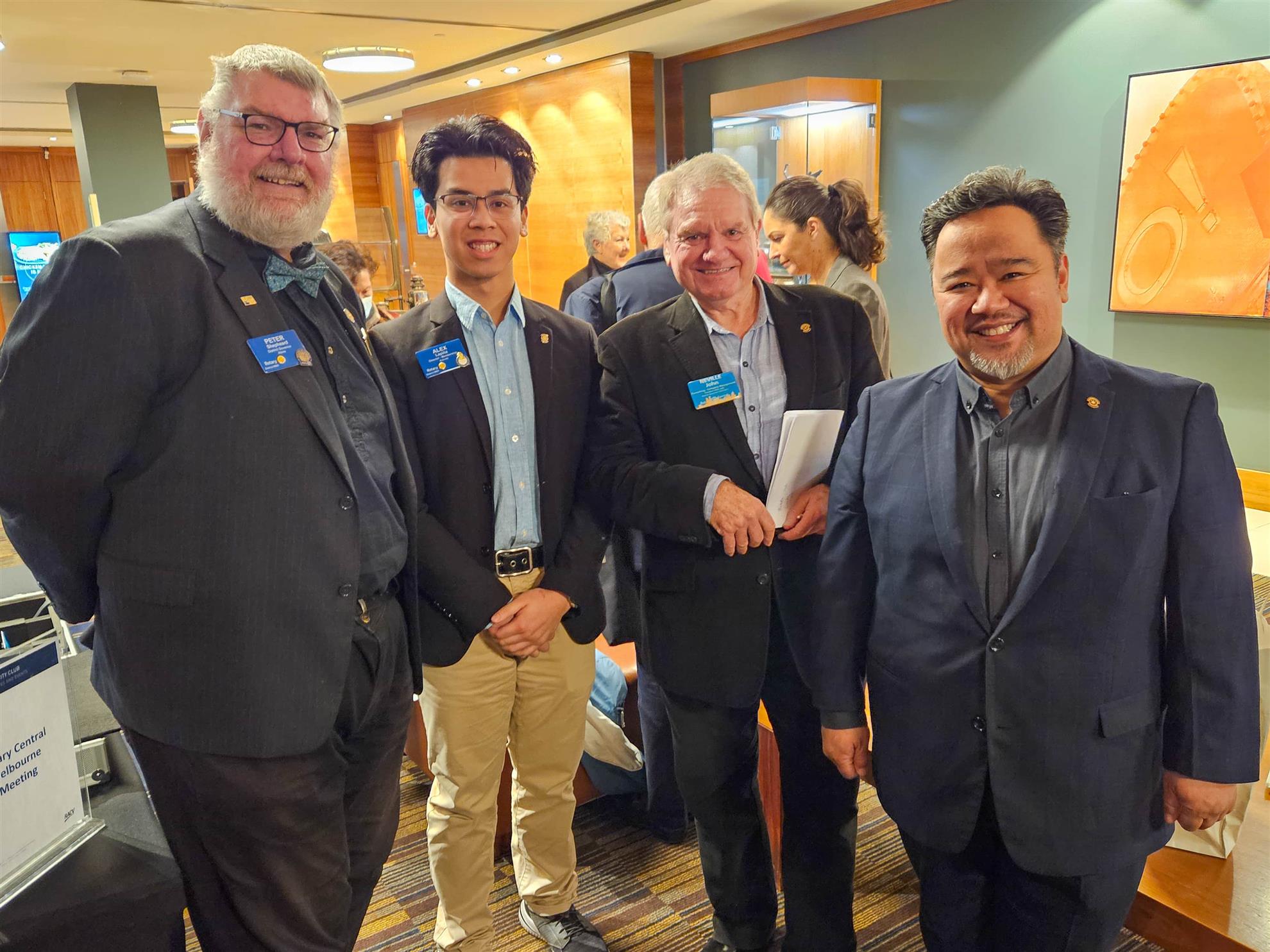
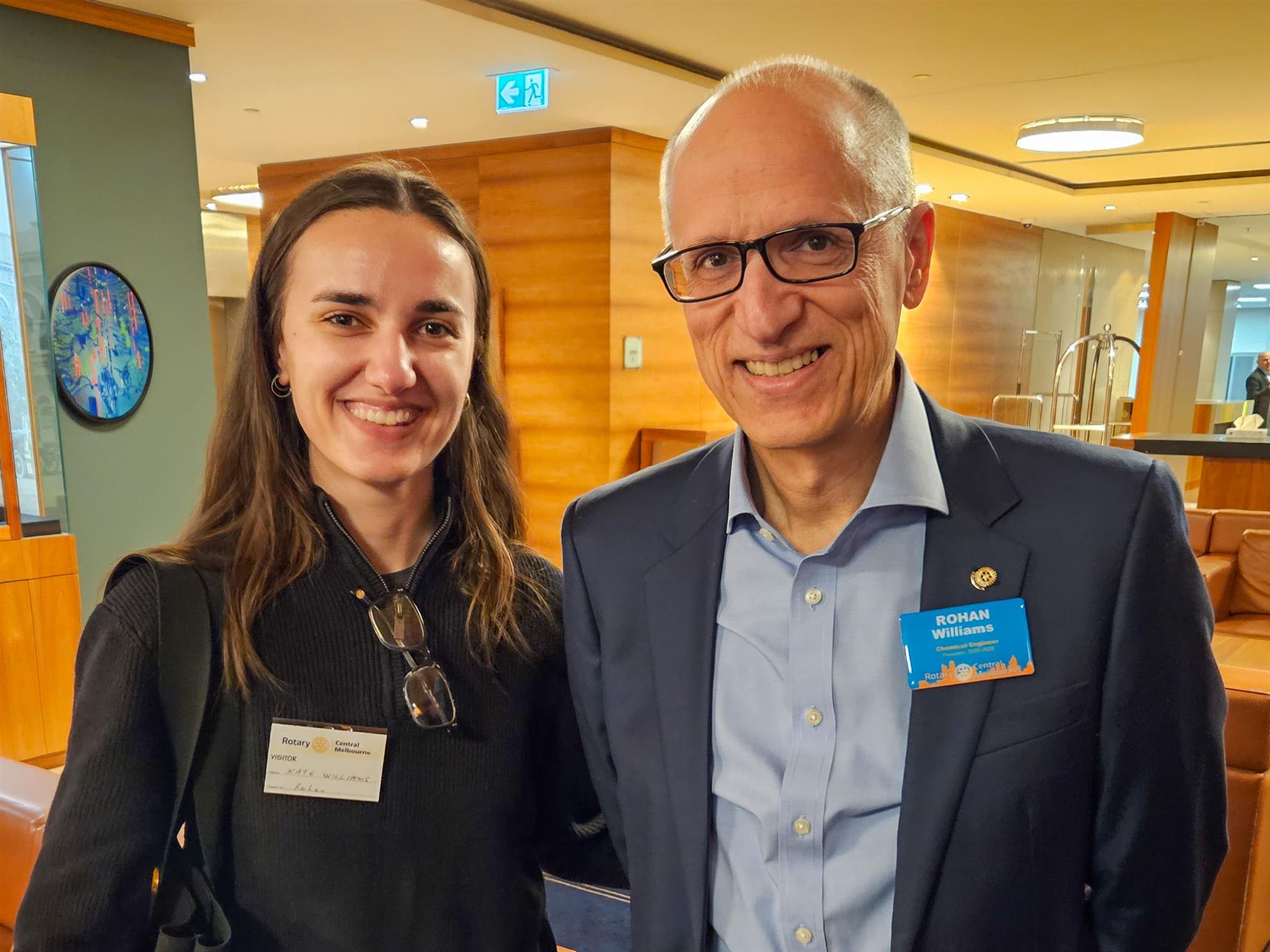
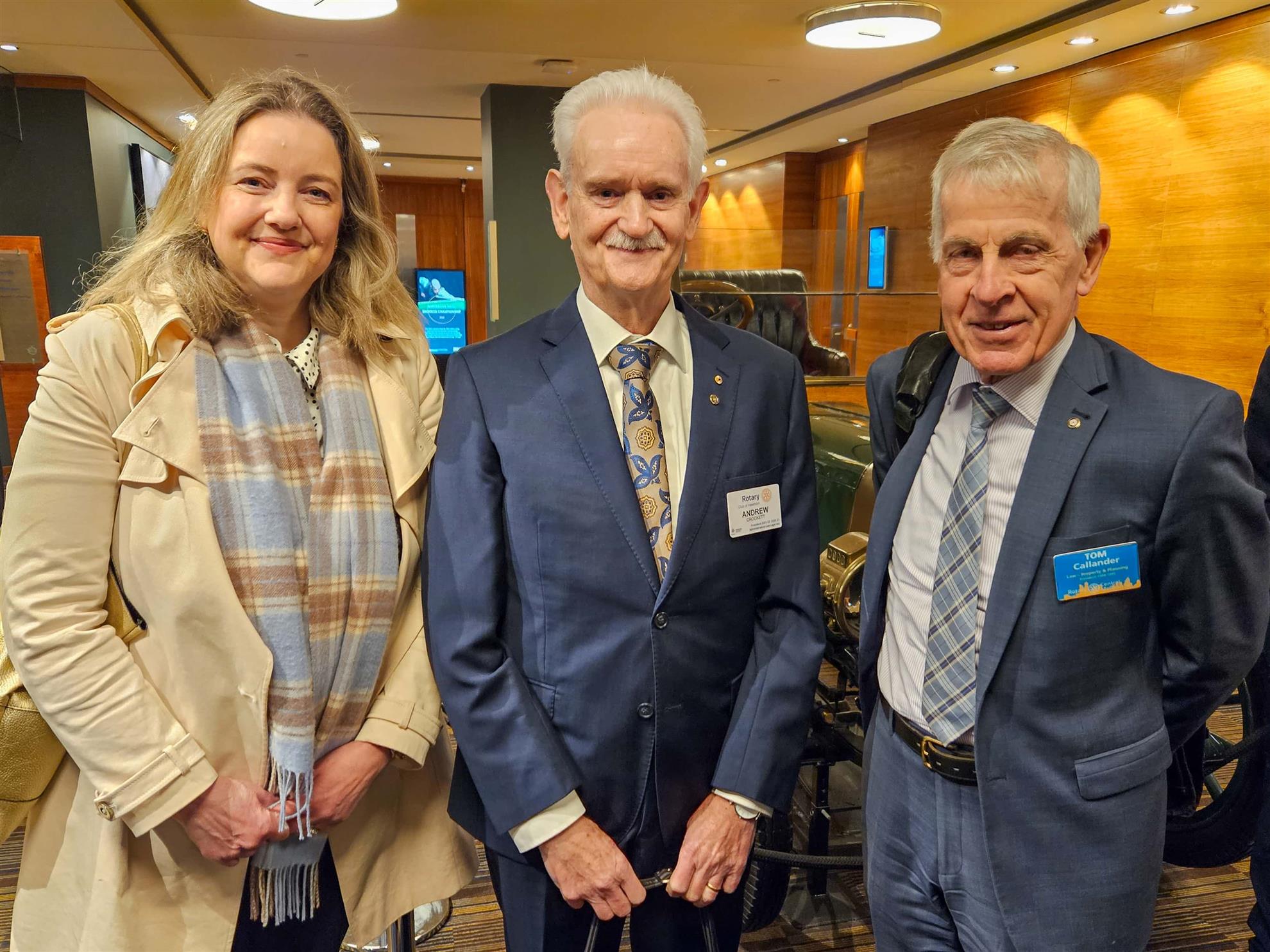
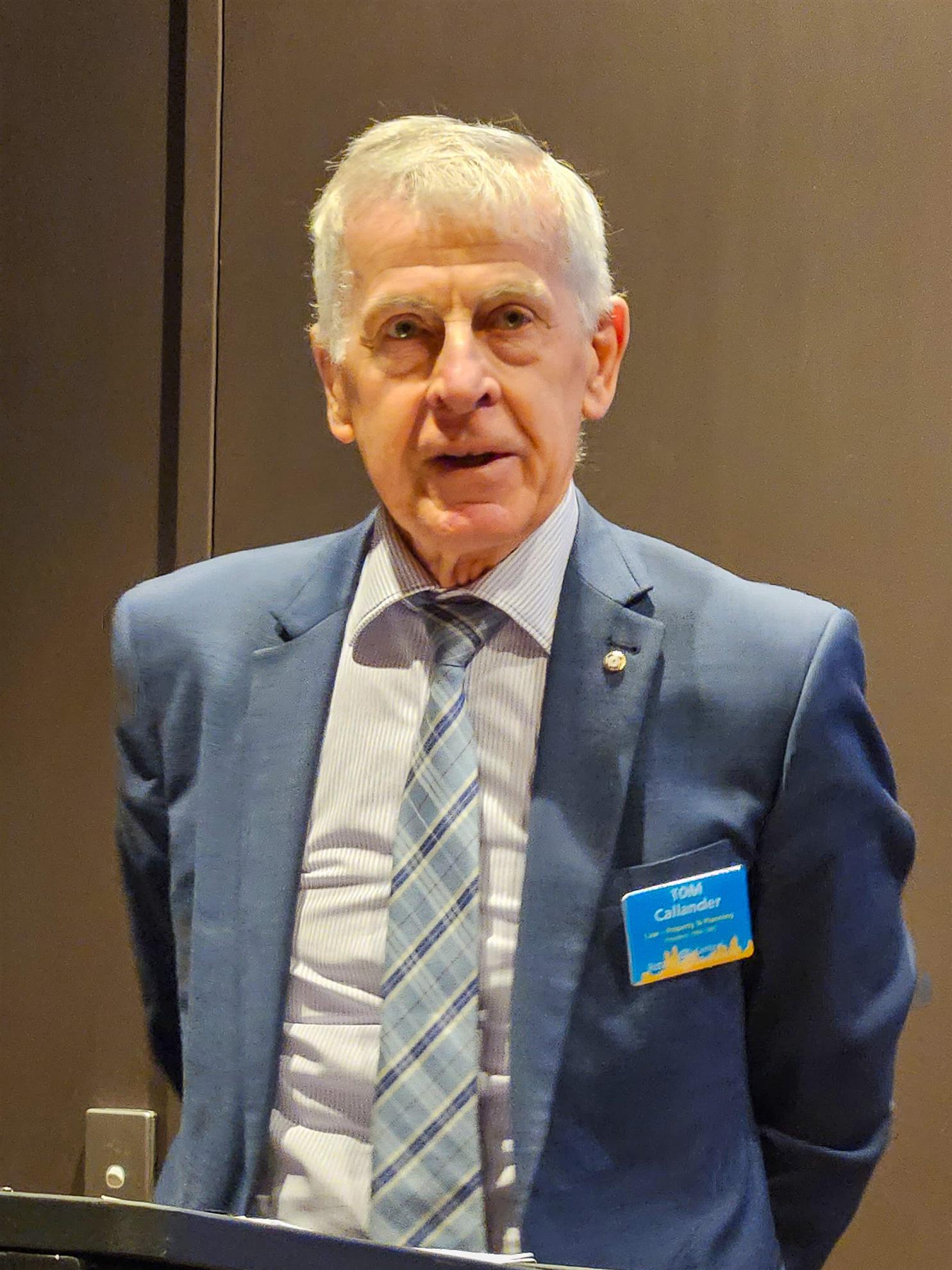
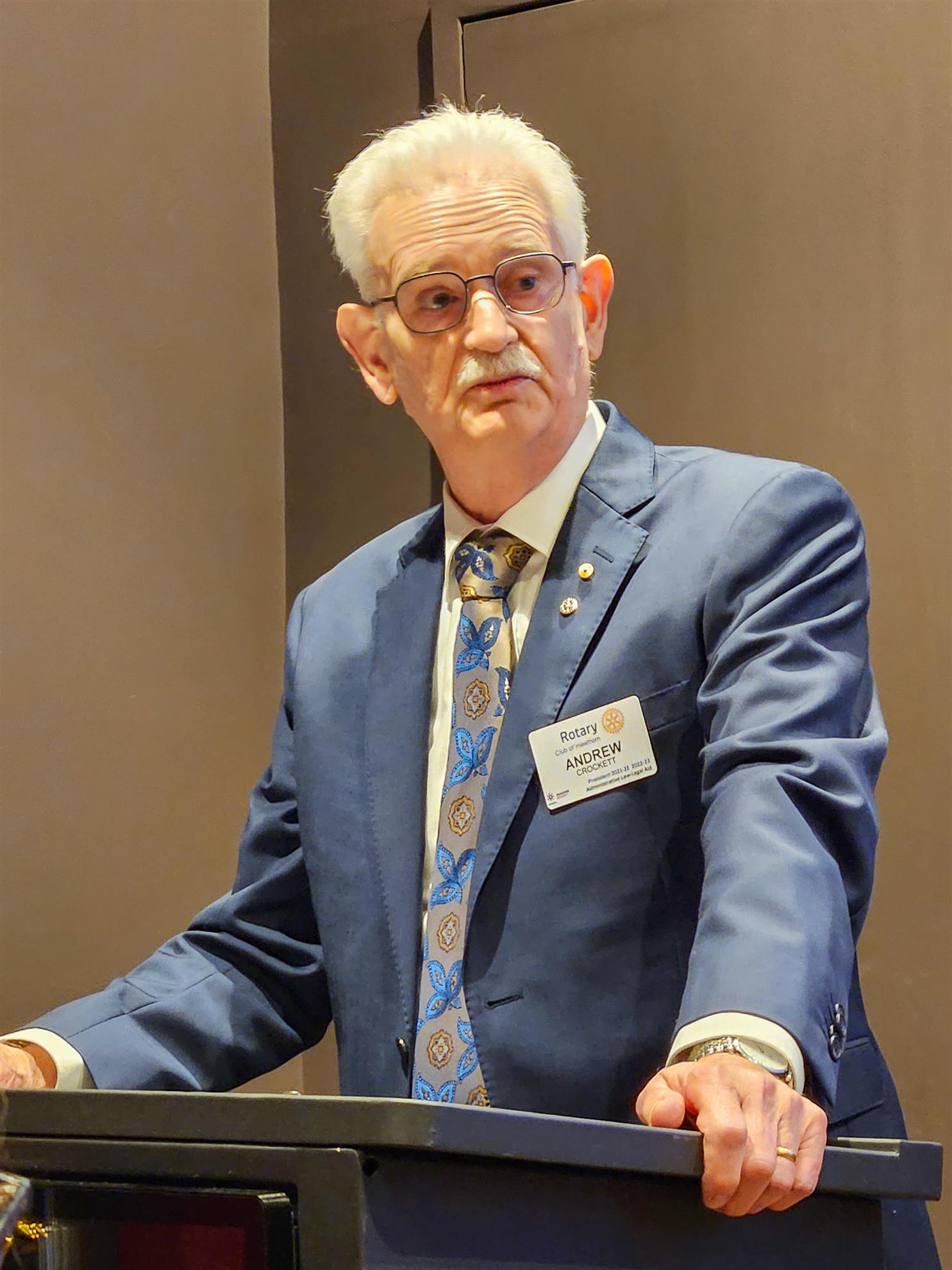
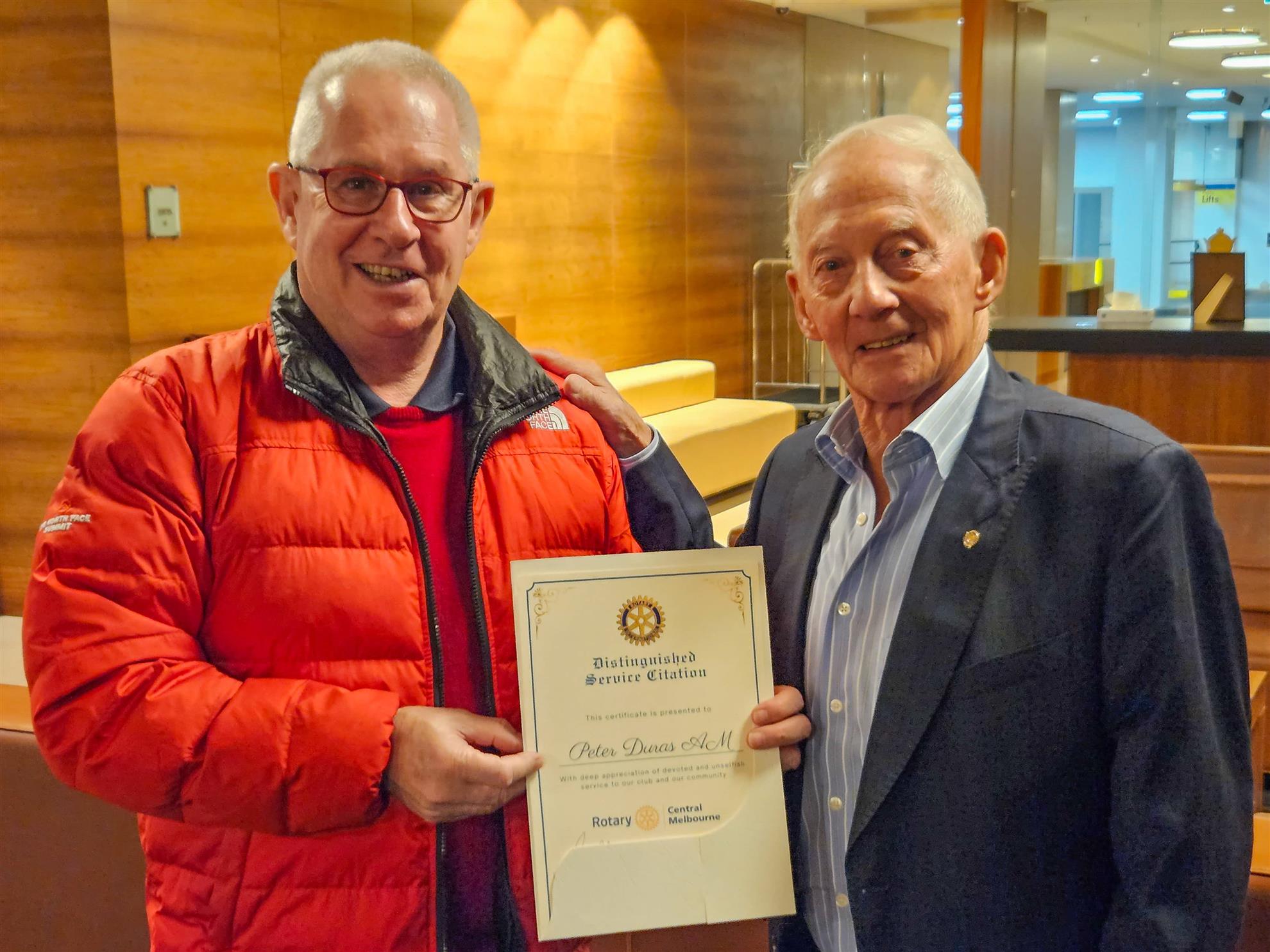
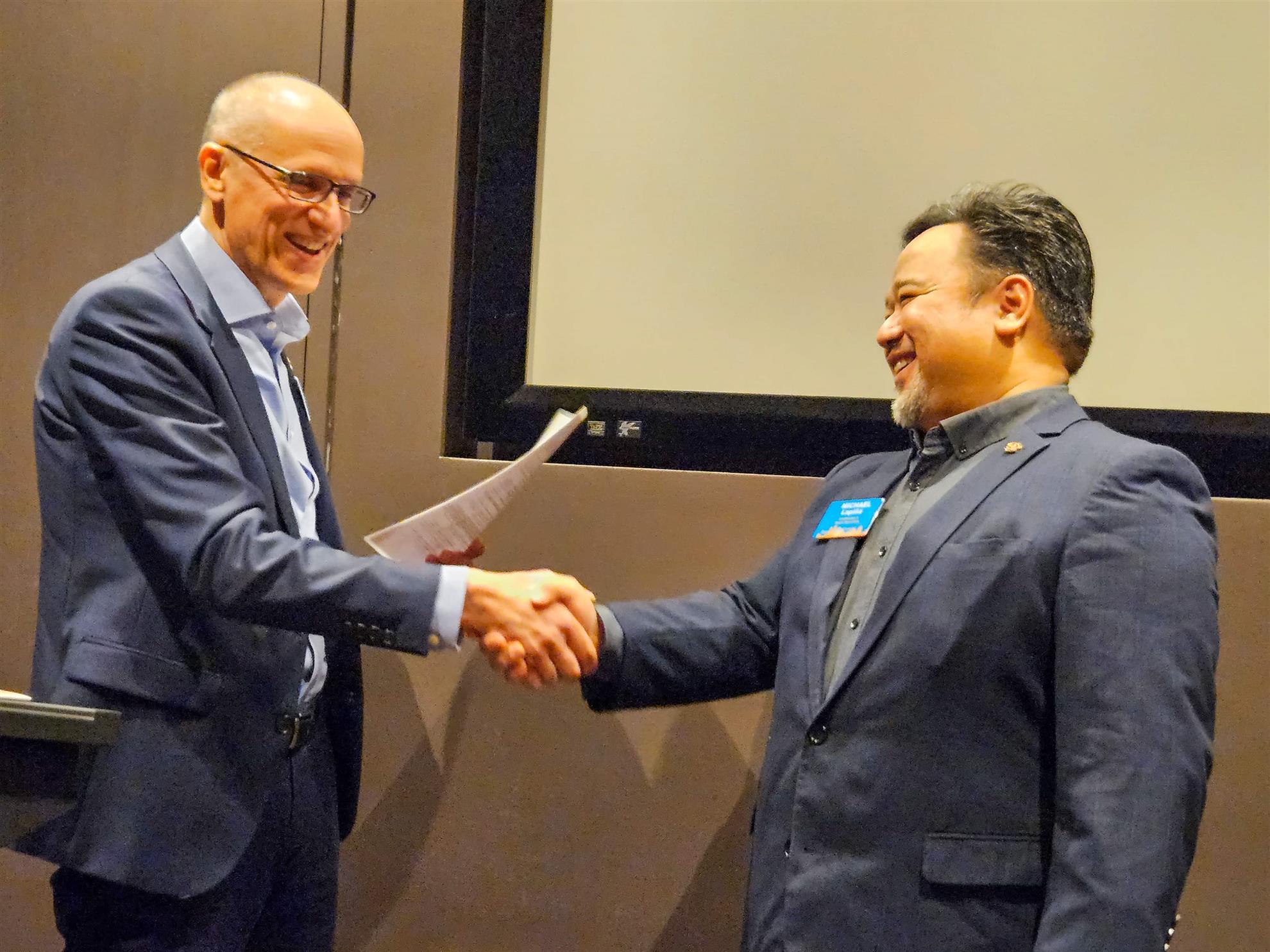
Opening The meeting opened with an acknowledgement of country by President Rohan followed by welcoming guest speaker Andrew Crocket AM. Other guests included Andrew’s daughter Sue, DG Peter Shepheard, Michael Lapina and his son Alex, Sue Duras and Rohan’s daughter Kate Williams. Tom Callendar, as chair, acknowledged the role of Rotary International in supporting and providing guidance all Rotary clubs around the world. Tom then introduced guest speaker. Guest Speaker Andrew Crocket AM is a former Director of the Legal Aid Commission of Victoria (now Victoria Legal Aid) and a former CEO of the Legal Aid Commission of the ACT. He also taught practical legal skills and ethics in the law faculties of Monash University and the Australian National University, and served on the Family Law Council, the Southern Health Human Research Ethics Committee, and the ACT Law Reform Committee. He was a board member of the Springvale Monash Legal Service, and a member of the editorial committee of the Lawyers Practice Manual Victoria. Andrew was made a member of the Order of Australia (AM) in the 2018 Queen’s Birthday Honours List for significant service to the law particularly to legal aid services, to education, and to the community. His topic was the Rotary Four-Way Test, entitled Is the Four-Way Test a practical test for action in the modern world? Is it the truth? Is it fair to all concerned? Will it build goodwill and better friendships? Will it be beneficial to all concerned? Interestingly, the Four Way Test originated in 1932, created by Herbert Taylor, an American Businessman and later a Rotary International President (1954-1955). It was intended to provide strong ethical principles that could rebuild trust and credibility in the Club Aluminum Products Company in the US, which was on the verge of bankruptcy during the Great Depression. The company survived and indeed thrived by implementing the belief that good ethics would lead to good business. In 1943 the Four-Way Test was adopted by Rotary International as part of its guiding principles. It has been translated into over 100 languages and is used worldwide. The Test is based on combining the elements of four ethical theories intended to answer the question “How should I act?” These theories are: - Utilitarianism, which states that the morally right course is the one that produces the greatest utility, i.e., maximises the benefit, pleasure, good or happiness while minimising the harm.
- Kantian principle of Categorical Imperative, i.e., which asks the questions such as “Do my actions respect the goals of human beings rather than merely using them for own purposes”.
- Virtue Ethics, which incorporates the consideration of what a person possessing virtues such as honesty and consideration would do in the same circumstances.
- Ethics of Care, which is concerned with responsiveness to others and ensuring the provision of care, prevention of harm, and maintenance of relationships.
Subsumed in all of these is the New Testament homily known as the Golden Rule, “Do unto others as you would have them do unto you”. Andrew discussed various situations in which different applications of four separate tests could be in conflict. And because this can happen, it needs to always be remembered that the Four-Way Test is a guide, not a set of dogmatic rules. In answer to his opening question, the answer is Yes, the Four-Way Test is a practical test for action in today’s world. Andrew then took questions from members. One of the most interesting was whether he thought the Test should only be applied to oneself, and not others. His view was that membership in Rotary should imply an acceptance of the Four-Way Test as a guideline to live by. Hence, the short answer is yes, but it should obviously be done with tact and empathy. Member Announcements - Roger Thornton reported that the Tree Planting last week was a success, with 25 persons (including 17 from Rotary) planting some 1200 trees – and, having a great lunch.
- Frank O’Brien reminded members of the next DIK working bee on 23 September.
- Tom Callander reminded members he is still collecting unwanted smart phones for Youth Projects.
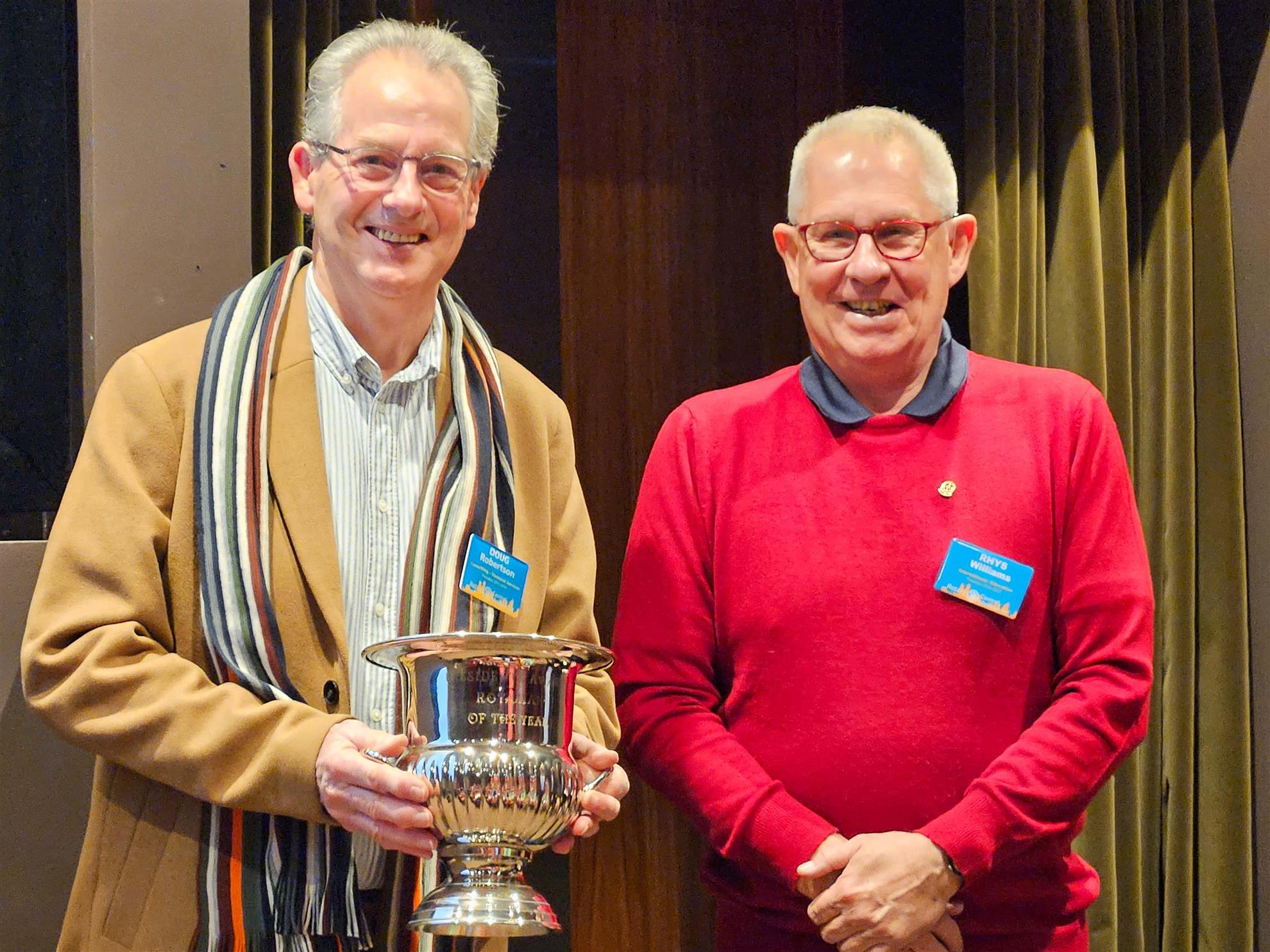
Past President Rhys had three important recognitions from the past Rotary year. - Doug Robertson was named Rotarian of the Year for his ongoing work as Treasurer and involvement in several other activities.
- Peter Duras was given the Distinguished Service Award for his work in Community Service.
- Sue Duras was given the Family Service Award for her numerous activities within the club.
International Service Plan for 2025/2026 IS Director Fleur Maidment presented a snapshot of the numerous projects being conducted by International Services in this Rotary Year. These include Laligurash School Project Kwee K’Buang Safe Water and Wash Thoo Mweh Khee School First Aid Hub Vietnam Foundation Summer Camps Interplast Rotarians Against Malaria Clean Water and Toilets Cambodia School Library Laos Future projects include - Due diligence on Gaza Aid
- Developing a Project Evaluation Framework based on the Club project evaluation framework approved by the board
- Evaluation of project sustainability
- Site visits and trips
- Fundraising
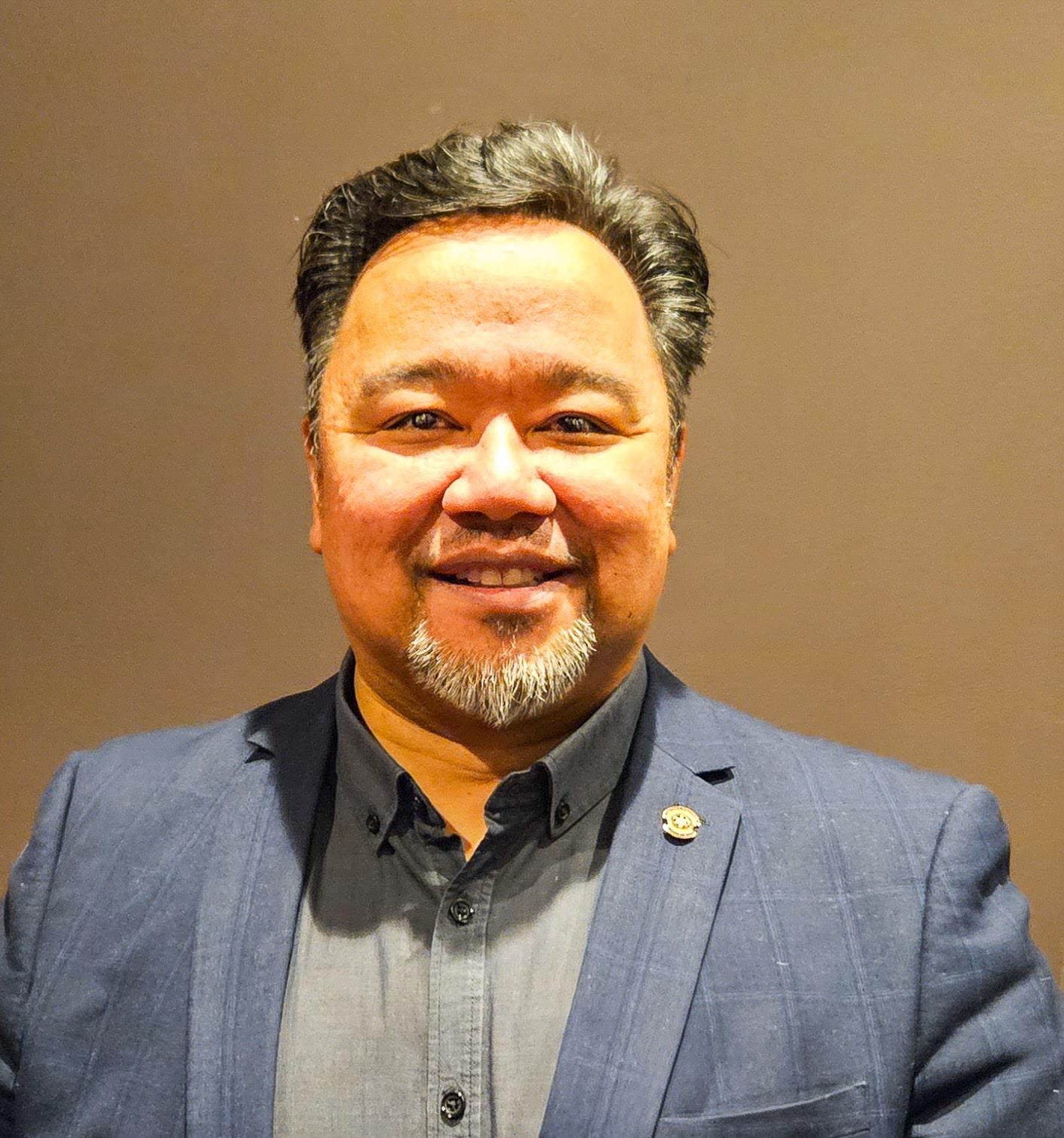
New Member Induction IPDG Michael Lapina was re-inducted into Rotary Central Melbourne. This was the third time he has been inducted into our club, because of his career taking him to other places. Nonetheless, Michael said he always thinks of RCM as “home”. Members enthusiastically welcomed him back. Closure Rohan then closed the meeting by again thanking Andrew Crocket for his fascinating and thought-provoking presentation. He also reminded all members that payment of the annual subscription is due by the end of this month. Lastly, Rohan reminded member that the next meeting would be on Tuesday 19 August at the RACV Club, and that the guest speaker would be DG Peter Shepheard. |